Saturday, 24 August 2024

"The Big Night in Toberkeigh"

 "The Big Night in Toberkeigh"


A varied programme there will be

On this great night in Toberkeigh

In speech and song, by young and old

The heartfelt welcome will be told


Those words upon your tickets plain

The reason why you came explain

In car, on bikes, from far and near

You've come in hundreds to be here


The Church is packed from door to door

Until the pews will hold no more

A pity, friends, you can't all stay

To pack it out each Sabbath Day!


Now, Mr. Thompson*, this great band

Comes from each corner of our land

Some husbands left their wives so dear

And others slipped out when the coast was clear


They've come from Whitepark's golden strand

From Ballinlea with its great pipe band

From Mosside, too, with its lights so bright

That the people can't sleep in their beds at night


They've  left their hens in their litter deep

They've left the sow and the pigs asleep

They've left the cow with the crumpled horn

There's some of us won't be home till morn


Then, Mr. Thompson, need I say

That I'm glad to see you here today

And others, Sir, will follow suit

To welcome you into the Route


But perhaps before I leave and go

I'll mention what you ought to know

Now some advice I'd like to give

About this place where you're going to live


Your health card give to Dr. McVicker

There's none will make you better quicker

His bottles are such lovely colours

His pills far stronger than any others


We're glad that you've bespoke a wife

For bachelors live a lonely life

And soon you'll say of Toberkeigh

"'Tis the wife who runs this house, not me!"


Then Duncan Gault will keep you right

He'll see the fire and lamps are bright

Alex. Stewart will provide the money

You're wife'll say, "Hand it over, honey!"


The Session Clerk's McConaghie

A decent man as you can see

I'll not name all the rest, but, oagh!

There's Henry McIntyre frae Croagh


The Secretary's our friend John Moore

He was lifting tickets at the door

His job upon Committee night

To keep the minutes he must write


The choir they sing both loud and clear

Miss Huey trains them, so we hear

I'm sure with me you will agree

They are a handsome lot to see


Now I will close this simple ditty

For it is longer than it's witty

And find a seat upon the floor

To listen and to say no more.


John C. Faulkner**


* Rev Cowan Gamble Thompson was installed on the 10th November 1953


** Rev Faulkner was the Croaghmore minister

Thursday, 1 June 2023

Miss Eliza Benning (abt 1811-1888) of Magheradonnell in Knockanboy, Dervock

 Just recently I noted the name of Miss Benning as a neighbour in an old Lyle farm map. I've discovered that she was the daughter of Captain Conway Benning and granddaughter of the Rev Conway Benning, rector in Glenavy Parish Church. Her father was an officer in the 66th Foot regiment and he perished in the Battle of Albuera in 1811 during the course of the Peninsular War.


I Eliza Benning of Magheradonnell in the Parish of Derrykeighan and County of Antrim do this Twenty eighth day of June in the year 1876 (six) make this my last Will and Testament hereby revoking all former Wills and Testaments at any time heretofore made by me. I leave and bequeath to Mrs Jane Field (alias Wilson) of Knockanboy my Zebra Wood Work Table. I leave and bequeath to Allen E Douglas Esquire Medical Doctor of Warrenpoint in the County of Down all my Framed pictures and all my Drawing Materials and all things connected with Drawing which I possess absolutely also my old gold watch, Gold Medal and Clasp and miniature of my Father in Gold and I direct that at the death of the said Allen E Douglas the said old gold watch shall be given to some museum previously named by him together with an historical account of it. To Mrs Grace Brooke (alias Ledlie) I leave and bequeath my small gold brooch containing the hair of my dear friend Miss Annie Stuart also my two Indian broochs which she be so disposed she may give to any of her daughters she may select for the gift. To Marcus Allen Esquire Surgeon in the Royal Navy I leave Stackhouse's History of the Bible which History belonged to his Greatgrand Father Benning also my Grandmother's likeness in Gold Ring taken previous to her marriage. Also six silver Tea Spoons, Six Desert ditto one pair of Sugar Tongs, Two Salt Spoons with my grandfather's crest. Two Table Spoons, Six large Forks,Six Small ditto (not silver) an old fashioned Cross for Centre of Table a pair of Telescope Candle Sticks with silver edges and a large Mahogany Chest with handsome brass Mounting which came from the State of Vermont (Capital Bennington) America. I leave and bequeath to Miss Millicent Douglas of Rostrevor County Down my Aunt Higginbotham's Writing Desk also Jane Martin's Work Table which once belonged to Anne Martin (alias Higginbotham) was the first Rosewood worked in Dublin and originally cost Forty Guineas. To the wife of the aforesaid Allen E Douglas I leave my Cameo Brooch. To Miss Ellen D Allen and Miss Amelia Allen of Lisconnan I leave any of my clothes which they may wish to have. To Messrs William Johns and Alexander Johns of Carrickfergus I leave all my Books in remembrance of their dear Father and Mother's Kindness to me. I leave and bequeath to Richard Maginnis Douglas Esquire of Portballintrae my Hall Clock which formerly belonged to the old family of Lyle of Knockanboy. I direct that the Tenant right of my farm in the Townland of Magheradonnell shall be realized in such manner as to my executors shall be considered best and the proceeds thereof as also whatever other monies I may die seized possessed of or entitled to after the payment of my just debts and Funeral expenses I leave and bequeath to the aforesaid Allen E Douglas Medical Doctor of Warrenpoint County Down whom I appoint residuary Legatee. Having received permission to be buried in the vault of the Stuart family in Derrykeighan Grave Yard I direct that I shall be buried there. And I hereby appoint Alexander Johns Esquire of Carrickfergus and the aforesaid Allen E Douglas Executors of this my last Will and Testament. In testimony whereof I hereontu attach my hand and seal the day and year herein before mentioned.

E Benning (seal)

Signed and sealed in presence of us who in the presence of Testratrix and of each other and being both present together attach our signatures as subscribing witnesses thereto the words "in such manner" being inserted in first line of third page ___ Alexander Field __ Mary Robinson.

Saturday, 16 July 2022

Quay Road, Ballycastle

 A old postcard of Quay Road, Ballycastle


and the demolition of part of a terrace following a fire


The terrace has now been replaced by modern apartments.


Thursday, 16 June 2022

Where There's A Will ..

The contents of wills can shed some fascinating social insights. This North Antrim farmer didn't mince his words: 

If any relatives or friends of mine should turn up at any time I leave to each of them the sum of one shilling. I do this because no relative or friend of mine ever did any any act of work or kindness for me so that I prefer my house-keeper and servant man because they worked long and faithfully for me. 

He left the farm to his servant man and, apart from a few small legacies, the remainder of his estate was shared between his two faithful servants. 

 A brother of one of my Donegal ancestral relatives had this advice/direction for his wife: 

I leave and bequeath to my dear wife all that I have and possess having full confidence in her that she will do all she can for the benefit of each of our dear children I order my children to obey her and be kind to her and if any of the children should be disobedient or stubborn I order her to give such an one an outfit and pay his passage to a foreign country

An uncle and another brother of the same ancestral relative left her substantial sums of money for the late nineteenth century in their wills. The uncle included this limitation: 

.. and to my niece [name] two hundred and fifty pounds, to her sole and separate use, free from her husband's control. 

Perhaps the uncle didn't approve of my ancestor's second husband. I descend from her first husband.

Monday, 3 June 2019

Sustainable Tourism and the National Trust in the Causeway Coast and Glens

Community Sentiment Survey

Tourism has significant potential to be a force for good in our rural communities, but we also understand too much tourism can be challenging and frustrating for local people. 

Our task is to discover directly from you, where you see that boundary, between what works for you and what absolutely doesn’t; how much tourism is too much, and what ideas do you have about how visitors could be welcomed, and attractions managed more efficiently, without negatively impacting your day to day local life. 

Matt and Cillian would like to hear about your experience of tourism locally and get your honest opinion about tourism and the National Trust’s ways of working. In order to do this we have designed this survey to get a better understanding about what you perceive as the benefits of tourism and to hear about where you have experienced its costs. This is completely confidential, and none of the information provided will be directly linked to you personally. The survey should take approximately 5 minutes to complete.

If you live in the vicinity of the Giant's Causeway and Carrick-a-rede Rope Bridge and would like to participate in this survey please click the following link. Please note that it is not secure.


Tuesday, 29 January 2019

RHI Inquiry - The Information Commissioner Writes

Letter to Head of Northern Ireland Civil Service

19 October 2018

Dear David,

I refer to our recent meeting regarding information governance in the NI Civil Service (NICS) and, in particular, the need to record and preserve decision-making appropriately in the interests of accountability and transparency.

I found our discussions very helpful and I was also encouraged by the views expressed at the Permanent Secretaries' Stocktake the following day. I now have greater confidence that the leaders of the Civil Service in Northern Ireland are committed to improving practice. Taking the opportunity now to review and revise procedures during the suspension of the NI Executive with an aim to implement them in advance of its re-establishment will, I anticipate, result in much more effective governance in future.

We agreed in our meeting that I would provide you with some recommendations relating to principles I would urge to be adopted within those revised operating procedures.  In part, these principles reflect the new technologies which are becoming integral to day-to-day working practices in government but which, without due diligence, may impact negatively upon transparency.  In summary, the procedures should:

•    Command buy-in from all staff, including senior management;
•    Be supported by regular information governance training for all staff;
•    Record all key decisions and actions, and the rationale behind them;
•    Ensure integrity in the use of new communication technologies; and
•    Manage all information effectively and appropriately according to need.

More detail underlying these principles is contained in the Annex to this letter.

Effective record-keeping is essential for transparency of government and it also assists organisations demonstrate compliance with all forms of statutory requirements.

As you will know, my own remit is in relation to the upholding of people's information rights as stated within data protection and freedom of information regimes. It is now a statutory requirement for organisations to properly record their processing of personal information and the decisions lying behind that processing. The same duties are not stated explicitly within the freedom of information legislation but I am nevertheless strongly advocating that public authorities adopt a "duty to document" as a matter of good practice.

I am also advocating this to the UK Government as a future amendment to the Freedom of Information Act 2000 or in other appropriate legislation. Adopting these principles - which we also will be promoting to other administrations - as part of your revised procedures, would put you in a strong position should this become a legal requirement in the future.

I also welcome your commitment to review the Northern Ireland Civil Service Code to ensure it reflects modern responsibilities in relation to transparency and open government. In doing so, I do hope that you will give these principles your due consideration.

As agreed at our meeting, my team in Northern Ireland, headed by Ken Macdonald, will be happy to work with your own staff in developing the new approach to be adopted by the NICS.

With best wishes,

[Signature]

Elizabeth Denham
Information Commissioner

ANNEX

•   Command buy-in from all staff, including senior management

In order to achieve all the key elements of good practice, the NICS must have in place organisational arrangements that support effective information governance. This includes leadership of the Permanent Secretaries and their Senior Management teams to ensure information governance is viewed as a core corporate function, as well as a statutory obligation, with clearly defined roles and responsibilities for all staff. By endorsing these arrangements, a culture of accountability will be promoted.

This may be achieved through a top level information and knowledge management strategy together with policies and procedures that are supported throughout all levels of the organisation. It is, of course, also essential to ensure departments are properly resourced to implement the new practices.

Departments may already have introduced new policies and procedures in relation to aspects of information governance as part of their preparations for the introduction of the new data protection regime. It should be possible to adapt many of those policies and procedures to apply to other types of information as part of a wider move to strengthening information rights compliance.

•    Be supported by regular information governance training for all staff

The policies and procedures adopted by NICS to achieve good information governance will only be fully effective if staff understand the importance of proper record keeping. This can be achieved through the provision of regular - and compulsory - information governance training.

On commencement of their employment, all NICS staff should undertake mandatory information governance training regardless of their role or function. Compulsory refresher training should also be provided at appropriate intervals. Training packages should be regularly reviewed and updated to reflect best practice (including ICO guidance) and to ensure that new and emerging techniques and technologies are properly considered.

At a minimum, all information governance training should contain key modules covering:

•    Roles and responsibilities
•    Recording information, including documenting key decisions and actions
•    Status of records
•    Use of technologies
•    Statutory obligations
•    Responding to information requests
•    Information sharing
•    Retention and disposal schedules
•    Security of records and information
•    Breach reporting

Temporary or agency staff, contractors and consultants should also receive clearly defined procedures in information governance. Roles and lines of responsibility should be set out clearly. This should ensure that all staff and workers who create records in the course of NICS business are adhering to these procedures.

•    Record all key decisions and actions, and the rationale behind them

Documenting decision-making is a good governance measure. It leads to accountability for the decision, promotes knowledge transfer and helps to ensure legal rights and obligations are met. Individuals expect accountability from public bodies in their actions as well as their information rights practices. An accurate record of actions is essential to this process. It will provide the narrative behind decisions that will affect the lives of the ordinary citizen, explaining how the decision was reached and subsequently whether to proceed or not proceed with a proposal.

The Information Commissioner expects public authorities to implement a "duty to document" all decisions made by them as a matter of standard practice. This would reflect to some degree the new accountability principle of the GDPR which requires data controllers to be able to demonstrate compliance with their accountability obligations. Again, the procedures adopted under the accountability principle may be easily adapted for other forms of record keeping. However, and crucially, a public body must be able to demonstrate the basis of any decisions taken by it.

Access to information rights depend on public authorities documenting their key activities and decisions. Unrecorded decision making - either orally or through the use of new messaging technologies - will undermine public accountability and the public's trust. A duty to document will address this by establishing a positive duty for public servants to create a full, accurate and complete record of their important business activities including, for example, decisions made regarding resource management, budgeting and policy. By creating those records showing the 'what' and 'why' of public decision making, accountability, transparency, good governance and public trust will all be enhanced.

A duty to document should not be onerous but instead be proportionate to the significance of the decision taken. Its focus is not on the creation of more records, but rather on the efficient and effective recording of the right records reflecting the business needs of public authorities and community expectations. It must be accompanied by strong information governance practices and standards in order to be effective.

•    Ensure integrity in the use of new communication technologies

Retention and accessibility of records can be complicated by the introduction and adoption of new communication technologies which may impact upon the volume and variability of records. New approaches to the transmission of information should be encouraged where it is appropriate to do so. However, risk assessments focussing upon information governance issues should be undertaken before adoption of the technology takes place.

It is understood that there may no longer be as clear a distinction between devices used for work purposes and those for personal use as there have been previously. The use of instant messaging services and social media applications as well as private email accounts often significantly blur the line between personal and business communications. This challenges the ability of public authorities to document and preserve decisions and may erode a proper record of decision making. Accordingly policies and procedures adopted by NICS must incorporated guidance on the use of personal devices for business purposes. Those who use personal devices to communicate about work matters - including government officials, special advisors and Ministers - must be made aware that such electronic conversations will be subject to the Freedom of Information Act. If such records are not retained by the relevant departments, there becomes a greater reliance on "oral" government to the detriment of transparency, accountability and good governance.

New technology does not change the statutory information rights obligations of public authorities subject to the Freedom of Information Act. As such, those obligations also extend to ensuring that these novel communication technologies are sympathetically integrated into the work of government departments in a way that will not abuse the proper duty to maintain records, hamper their information rights obligations as public authorities or discredit their information rights handling with the general public.

•    Manage all documents effectively and appropriately according to need

NICS departments should review and manage their records effectively throughout the entire life cycle from creation to transfer for preservation or disposal. Guidance for public authorities on good records management is provided by the Lord Chancellor's Section 46 Code of Practice.

The Code applies to "Information created, received and maintained as evidence and information by an organisation or person, in pursuance of legal obligations or in the transaction of business" irrespective of how it has been stored. This includes both paper files and digital records and also business and information systems (eg, case management systems and financial records). All government departments need to be certain of the scope and nature of the documents and information that must be kept to meet their business, legal, regulatory and accountability requirements. Staff should be advised of these during their information governance training.

As part of the preparations for the implementation of GDPR, the ICO advised all organisations to undertake an information audit across all areas of their business. Having completed such audits, NICS departments should already know what records of personal information they hold, the legal basis for holding the information, the purpose it is held for and the relevant retention period. A similar audit should be undertaken for other categories of recorded information. This exercise may be informed to a large extent by the earlier work already undertaken.

Public authorities subject to the Public Records Act (Northern Ireland) 1923 should also have arrangements in place to ensure the timely and effective review and transfer of public records where applicable. Disposal of records should be undertaken only in accordance with clearly defined policies. In this regard, it is important for staff to be aware of the distinction between a transitory and non-transitory record; this often poses a difficulty for staff. Crucial to this is understanding the content and context of a record, than just its form.

END

The public might well have expected all of this to be well established current practice. Indeed, the Office of the Information Commissioner has provided Model Publication Schemes** for numerous types of public governance, including advice on making available agendas, minutes and officers' reports so that those who are interested can discover how decisions are reached.

Ironically, this letter has been provided in PDF image format which can't be word-searched - yet word-search is an essential ingredient of transparency - so I've gone to the trouble of making it more accessible!

** The Northern Ireland Audit Office subsequently provided reports which were cut-and-pasteable, word-searchable and user-friendly.

Added

Email to RHI solicitor [18 September 2018] "I've listened to some of the RHI inquiry sessions and word searched some of the transcriptions. However, the Inquiry website should be searchable but isn't. Can this weakness be remedied? My request is based on the Information Commissioner Office's Model Publication Scheme's direction that information should be 'easily identified and accessed by members of the public'."

Email from RHI secretary [18 October 2018] "Your email below was passed to me, as the design and maintenance of the website is an administrative matter.  I apologise for the delay in getting back to you, but I wanted to investigate whether it would be possible to provide the type of search facility you envisage.  There are some difficulties because of the varied formats in which documents have been provided to us, but we have now been assured that a search facility can be installed that will cover most, but not all, of the information we hold.  I have therefore asked our IT team to take this forward.  It will have to be designed, applied and tested, but we hope to have it available to the public in the next couple of weeks. I hope this will be of assistance to you."

Email from RHI secretary [23 November 2018] "Thank you for your email. Our IT Team (which sits outside the Inquiry) has produced a search facility that was found to require further refinement when tested.  They have been in contact about it again this week and I will let you know as soon as we are able to offer it on our website."

Email from RHI admin [19 December 2018] "I have been advised that the search facility for the Inquiry website is still undergoing testing but should be available for use in the New Year. I apologise for the delay to date."

Email from RHI secretary [6 February 2019] "It is a long time since you first raised the matter of a search facility on our website.  We have experienced a number of difficulties along the way, but I am pleased to say that our IT support team has now given us a version that should be of some assistance to those seeking to navigate through our archives.  I hope this will be of help to you and I apologise for how long it has taken."

Added

Email from a senior ICO case officer: [18 October 2018]: "There is nothing in the requirement that the information in a Model Publication Scheme should be easily accessible and identifiable that would require a website to be word searchable. As such we would not be able to intervene in asking the RHI Inquiry to provide that functionality."

This ICO assertion is at odds with regular references to 'easily identified and accessed by members of the public' in publication schemes!!!

Saturday, 26 January 2019

Sarah Ann Taggart of The Poole, Ballyoglagh - Born 1864

Sarah Ann Taggart was the eldest child of James Taggart and Margaret Martin; she was born on the 2nd of April, 1864, in a clachan known as The Poole in the townland of Ballyoglagh and parish of Billy.

Her siblings were Nancy/Agnes, Elizabeth, Eliza Jane, Martha, twins James and John, Daniel and Margaret Ellen and half-siblings Mary Ann and Bethia.

I've found a baptism record for Elizabeth but not a registration. The presence of Eliza Jane would suggest that Elizabeth might have died soon after birth. [Edit. I found her 1868 birth registration and her accidental death eleven months later]

Eliza Jane's 1920 death record names the surviving siblings and she's named Lizzie on her 1893 marriage record; there's no mention of an Elizabeth. The newspaper obituary notes that Sarah is living in Ireland.

I think I've found Sarah Ann but I can't be certain. A Sarah Ann Devenney nee Taggart died at Railway Road, Coleraine, on the 12th of February, 1927, aged 62 years. This indicates 1864 or 1865 as a probable year of birth. She had a son called James Marshall Devenney, born in 1896, and Eliza Jane's husband was called James Marshall.

Sarah Ann Devenney's bridesmaid in 1888 was called Agnes Taggart and this fits with Nancy/Agnes above and her father was called James Taggart. She was living in Coleraine at the time of her marriage but the record doesn't show place of birth.

The 1901 census gives County Antrim as her county of birth and there was only one Sarah Ann Taggart in County Antrim or County Londonderry with a father called James who was born in the 1864-1868 time frame.

Thomas and Sarah Ann Devenney had the following children in Coleraine [Railway Road, Bankhead Terrace and James Street]: David, Thomas, Margaret*, William*, William, James Marshall, Andrew Reid*, Andrew Reid, John* and Ellen [*died as infants].

If anyone can add a piece to this family jig-saw please email NALIL blog.

Sunday, 20 January 2019

John Nevin - United Irishman Captain in 1798

John Nevin formerly lived in the townland of Kilmoyle, four miles north of Ballymoney, on the road to Portrush. At the time of the 1798 rebellion he was a captain in the United Irishmen. He went into hiding following the collapse of the rebellion, was supposedly smuggled through Coleraine in a barrel and fled to America where he died in 1806. Some of his friends were tied to cartwheels and flogged and a few were hanged. Many of their properties were burned down. His brother James, the recipient of this letter, had returned from America and no charge could be made against him seeing he was abroad at the time.

Knoxville
Tennessee State

10 April 1804

Dear Friend

Happy in an opportunity of writing and now embrace this. Your last favour I recd in less than two weeks from this date. I have also seen a Mr Stewart from the Garden a few days ago on his way to Natchez, who left Ireland in November last and informs me that troublesome times are not likely to be over yet. Oh! that I could have you all in this country with the value of your property. Here I enjoy equal rights and privileges with the Governor and I am an equal companion of our first-rank, whilst you must pour out your purse to Landlords and whipers-in and your hat in your hand at the same time.

You have desired to know my business in the Indian Nation and also in Charlestown South Carolina. I went down the Tennessee river with a boat laden with flour and a number of other articles which I sold to the Indians and bought steers off them, and after stall-feeding the oxen, drove them to Charlestown, and just now am awaiting the arrival of a boat I have bought to go down the river in and expect to go in three days. No doubt you think it is a dreadful business trading with the Indians but you are entirely misinformed respecting it. You expect that we, who go there, must have Indian wives. True, the white men who live in the Nation have mostly red women but that is their pleasure. I have my license from the Agent of war for one year and I can come and go as I please without either woman or man, or with what company I see cause to take along.

I had intended being home last spring but it was out of my power. But God willing I shall see you all this one coming. I am sorry to hear of so many of my countrymen being confined and some executed but the permissive will of God must be done. You are under the rod of affliction in a high degree and Oh! that it may be sanctified and improved. You must await with patience your deliverance (if not come before you receive this) it is fast hastening.

You complain of a declension of religion in me which I may, with shame, acknowledge in part, but such religion as we have here none of you have ever seen. I was yesterday at a Sacrament (and exercise as they call it) but not so bad as some other meetings I have been at. We have them here for days as if dead being struck down; Others break into the greatest raptures of prayer, the Minister being obliged to quit preaching; and at their meetings you can see them dancing, running, jumping, jerking and twitching like a person in a violent convulsive fit. With praying, singing, and shouting glory glory as loud as they can bawl, and wringing and clapping their hands and such conduct as is rarely seen in religious worship, and I wish it may be by the direction of Heaven. In my present attempt it is as far beyond my tongue and pen to describe as you may think I am beyond anything you have ever seen, and although it hath alarmed me yet I cannot approve of it as God is a God of order and not of confusion.

We are now in this country under a real Republican Government and the best in the world and have got into possession of a new and extensive country which Ireland would not be a garden to. The river Tennessee goes down South into it and perhaps I may visit it before I return. My situation in life is not changed yet, and what is still worse, no appearance of it. As for my health thanks be to God alone I have never known (I may say) what it is to be sick one hour. If you receive this in time and it is in your power please send me some linen this season that it may be an addition to my stock in going home.

Please remember me to Brothers, Sisters, Cousins, and their Families, Mr Steph Hunter, Mr Rodgers’ Family and Loughconnely people and all enquiring Friends. Please make my apology for not writing as the distance and few opportunities puts it out of my power to write to everyone.

I remain your tender and ever affectionate Brother till death.

John Nevin

Derrykeighan Tythe Problem 1758

Parish of Loughguile - an 1801 letter

Sunday, 15 April 2018

Bushmills - Bush Telegraph - Spring 2018


Click to read and click again to enlarge
Move the cursor to read the enlarged image

Sunday, 21 January 2018

Major Redmond, Private Meeke and a Disunited Ireland

Act of Duty and of Bravery and Humanity, not of Reconciliation

My attention was caught by the headline 'United Ireland' in a tweet by Irish Times journalist, Ronan McGreevy:


The message was retweeted by the Irish Tánaiste and Minister for Foreign Affairs and Trade, Simon Coveney:


It's quite fair to label John Meeke as an Irishman but to caricature him as an Irish nationalist - 'United Ireland' - is not only wrong, it also does a major disservice to those who have an authentic desire for reconciliation, irrespective of the political context, and it shows a lack of respect for those aspirations identified in the 1998 Agreement.

John was born in Ballyhunsley in 1894, a son of James Meeke and Margaret Sinclair. He signed the Ulster Covenant in Dervock Orange Hall in 1912:


From the Ballymena Observer, 21 December 1923:

ULSTER B SPECIAL'S DEATH

STOOD BY MAJOR REDMOND ON BATTLEFIELD

The death of B Special Constable John Meeke, Benvarden, Dervock, County Antrim, a member of Benvarden L.O.L 1001, recalls a striking instance of individual bravery of the men of the Ulster Division.

Deceased, who was only 28 years at the day of his death, like so many thousands of Ulstermen, went to France with the Ulster Division, and he won the Military Medal for conspicuous bravery in giving first aid under fire to Major Redmond, of the 16th Irish Division.

The Ulsterman stayed beside Major Redmond amidst devastating fire, and did what he could for the wounded Irish officer, though he himself was suffering from a shattered ankle, until a party of the Ulster Division conveying German prisoners came across them and conveyed both officer and man to safety.

Meeke was one of six men for specially dangerous duty with an R.E. officer when the great mine was exploded at Messines on June 7, 1917, and he was severely wounded in October, 1918, by an explosive bullet, which left such terrible injuries that eight operations and a prolonged stay in hospital followed.

Though he never fully recovered his robust health, when the call came for men to defend the Ulster State he joined the Specials, and was attached to Benvarden Platoon.

There was a very large attendance at the funeral, and a firing party of his comrades attended and gave military honours to the remains of a truly brave Ulsterman.

Deceased's brother, Samuel, also gave his life for the Empire. Made a prisoner, he was forced by the brutal Germans to work in the sulphur mines, and this wrecked his health. Though obviously dying, he was kept prisoner until after the Armistice, and passed away within a fortnight of his return home.

Special-Constable Meeke leaves a widow and two infant daughters. Mrs Meeke was injured whilst working in a projectile factory, and three of her brothers were killed in the war.

John was a gardener in Benvardin when he died of pulmonary tuberculosis on the 7th December 1923. He'd married Kathleen/Kate Craig of Ballyrock in Derrykeighan Parish Church, Dervock, on 17th May 1922. As recorded in the newspaper report, three of her brothers perished in the war: Alexander and Samuel on 1st July 1916 and John on 24th March 1918.

Sunday, 31 December 2017

A Personal Introduction to History and Politics Post-1990

This exploration began with genealogy, 
in particular, Rev Mullin's 'Families of Ballyrashane'.


Responses From Two Political Leaders Who Are No Longer With Us


Tuesday, 26 December 2017

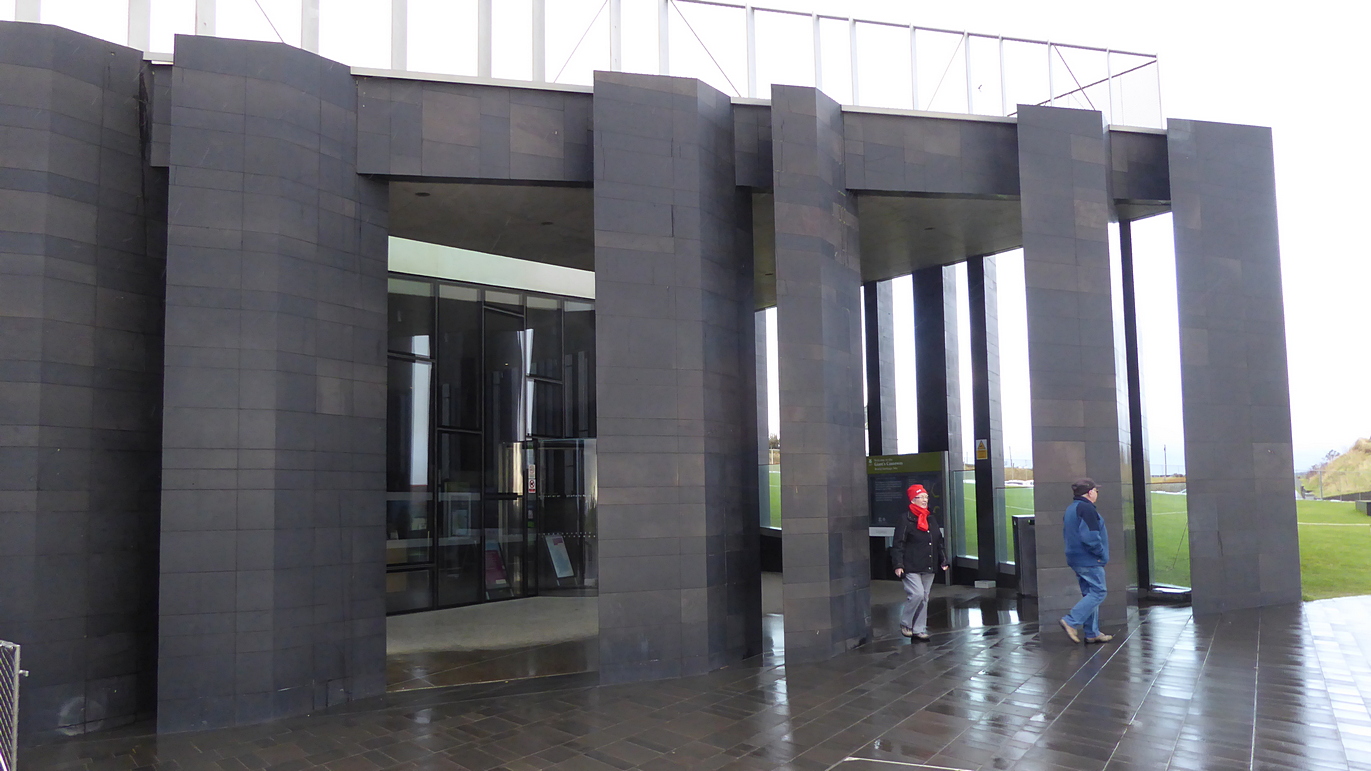
Giant's Causeway Visitor Centre - Boxing Day Blues - Without Relief

 Visitors arrive at the Giant's Causeway come rain, hail or snow - or holiday. I'm told that the now defunct Moyle District Council opened their toilets at the Causeway on Boxing Day; Causeway Coast and Glens Borough Council toilets at the Park and Ride car-park in Bushmills were open today; but the National Trust premises were locked up.


An invitation to visit but no essential facilities provided


Boxing Day visitors braving the elements


No one at home


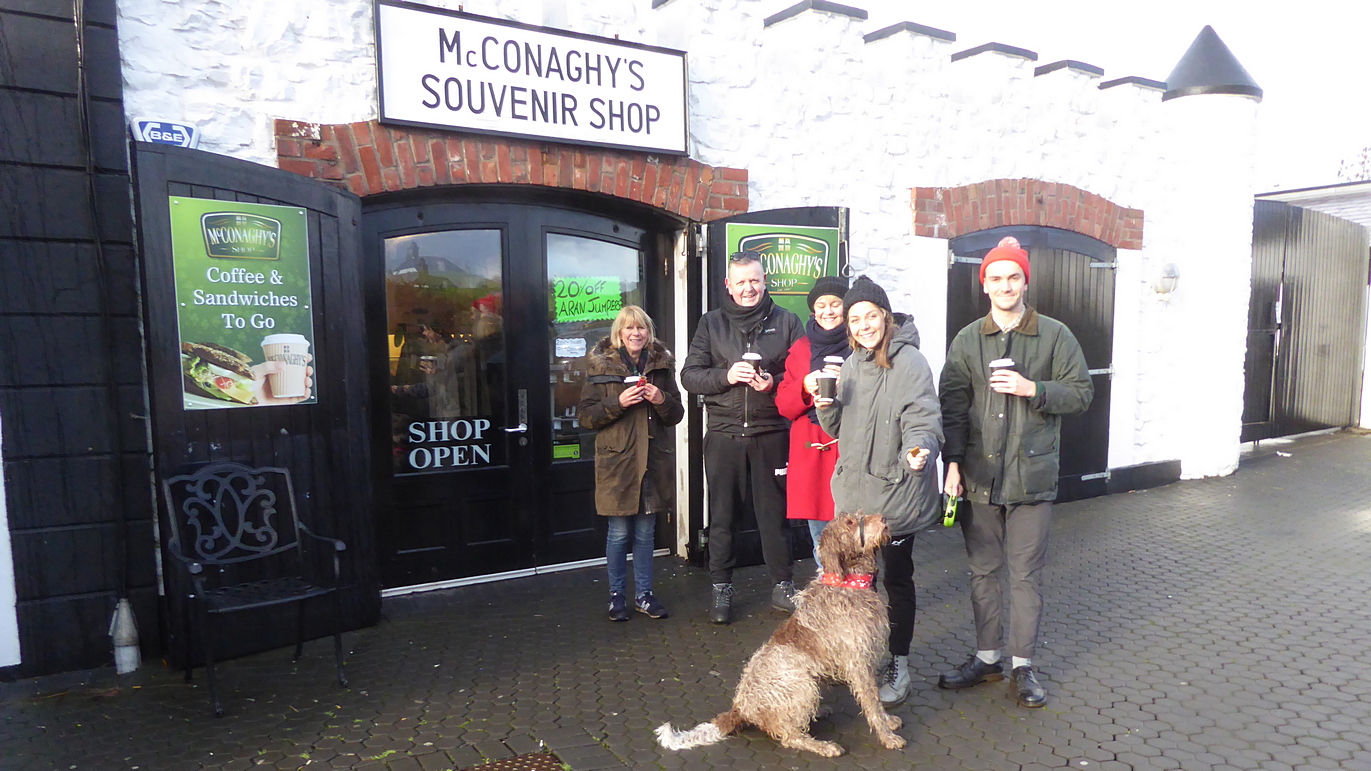
Hospitality at McConaghy's Souvenir Shop on Boxing Day 2017


Tommy McConaghy - proprietor

The McConaghy and other local families have traded at the Causeway for generations but this appears to be reaching an end as I understand that the National Trust has refused to renew the lease. Instead the Trust has applied for a change of use for the two shop units to toilets and this has been granted by the Council Planning Service in Coleraine.

Snippets from the Planning Report

Neighbours: There are 23 objections to this proposal.

The objections raised matters of concern in relation to:

 The loss of a shop which provides an important amenity to the local community.
 Loss of focal point for the local community.
 Concern is also expressed at the management of the site by the National Trust and their motivation for the application.

Other Matters

8.11 There have been 23 letters of objection to the proposed change of use. Concern centres on the loss of a local amenity which serves as a focal point for the local community.

8.12 There is no provision under current planning policy which would establish a presumption against the loss of rural shops. It would be unreasonable for the Planning Authority to insist on the retention of the shop. As such their intention to terminate the lease afforded to the shop is not a significant material consideration of the planning process. As outlined above the proposed change of use would not detract from the character and is in accordance with planning policy and the issues raised in the objections could not be upheld. 

The removal of the last local trader isn't just the loss of a local amenity; it detracts from the character of the Causeway experience and so should have been a material consideration, not just for planning officials but also for elected representatives at local and regional level. 

Today Tommy wasn't just providing warm drinks and mementos; he was also responding to numerous complaints about the absence of toilet facilities.

Added December 27


No relief - even at the the three small poorly signed free toilets

Would it not be possible to provide extra toilet capacity here?

Tuesday, 28 November 2017

Bushmills - War Memorial Hall at Castlecatt - Opened 1926

GALLANT ANTRIM MEN

WAR MEMORIAL HALL AT CASTLECATT

Opened by Captain Lyle
[Friday, November 19, 1926]

There was an interesting ceremony yesterday at Castlecatt, near Bushmills, when a hall, provided at a cost of over £1,400, in memory of the men from the district who made the supreme sacrifice and others who served in the great war, was opened by Captain Sydney J Lyle MC, Ballycastle.

Over the principal entrance is the inscription in relief - "In Memory, 1914-1918." Mr Albert McMaster, Ballymoney was the architect, and the contractors were Messrs Cochrane & Elliott, Portrush.

THE LEADING SPIRIT

Mrs Denny has been the leading light in the movement from the beginning, enthusiastically backed by her husband and other residents in the district. Aleady about £800 has been raised, and Mrs Denny hopes, by means of entertainments and other schemes, to secure the balance. In Castlecatt a basket-making industry, of which Mrs Denny was the pioneer, is carried on, and the profits from this are to be devoted to the Building Fund of the new hall until such time as the debt has been cleared off.

Mr Albert McMaster, the architect, presented a silver key to Captain Lyle. Rev Samuel McCully, Bushmills, led the singing of "Land of Hope and Glory," Mrs Denny presiding at the piano.

Colonel W S Traill DSO, who presided, said the hall would remind everyone of what they went through in the days of the war. It had been built, as they all knew, through the energy of his sister, Mrs Denny. Through her and their own exertion - because everyone has helped - they had now a hall for themselves. It was only right that Capt Lyle, who was so intimately connected with the the men who served from that district, should open the hall.

A PROUD OFFICER

Captain Lyle said he had been very closely associated with North Antrim men who served during the war. He had command of a company known as the North Antrim Company of the 12th Battalion Royal Irish Rifles, which was recruited entirely from that district. Something like 400 men joined the company, and though that was not by any meansall that served from North Antrim it was a large proportion. Without boasting of the company he would say that he had every reason to be proud of it. Since they went out in 1915 he could not think of a big battle where the North Antrim men were not present. At the Somme - where Sir Harry Macnaghten, Bushmills, lost his life - at Ypres, Messines, and Cambrai the company lost heavily in officers and men. After that, unfortunately, the supply of troops from North Antrim became exhausted, and the company, more or less, lost its identity, and reserves had to be drafted in from different parts of Great Britain. The battalion to which the company was attached was one of the two battalions of the Ulster Division which remained intact and went to Cologne after the armistice. The graves of the men of North Antrim from one end of of the British front to the other in France and Flanders.

Thanks to Captain Lyle and to all who had helped towards the erection of the hall were expressed by Mrs Denny. They hoped shortly to have tablets provided in the hall giving the names of the fallen and of all from the district who served. Those men had set a splendid example of devotion to duty.

[Published 20 November 1926 - Northern Whig and Belfast Post]

Thursday, 9 November 2017

Causeway Coast and Glens Borough Council - Ballymoney Ancestry Project - Suspended - now Restored

UPDATE :: November 15
ballymoneyancestry.com has been restored

A NALIL friend in the USA recently tried to access ballymoneyancestry.com and received the following message:

This website has been suspended

I'm told that a member of staff from the newish Causeway Coast and Glens Borough Council requested that the site be cancelled.

The Ulster Historical Foundation had this to say about the Ballymoney Ancestry project in the past:

"Since 1997, Ballymoney Borough Council has attempted to collect in a single depository the most significant local genealogical resources (such as householders lists, trade directories, hearth rolls etc.) relating to the town of Ballymoney and the villages of the present day borough – Balnamore, Cloughmills, Dervock, Dunloy, Loughguile (or Loughgiel), Rasharkin and Stranocum. The Ulster Historical Foundation was commissioned to compile databases of sources including workhouse records, school registers, estate records, valuation records and will indexes. Background information on these sources was also provided by the Foundation.

These records have been released online in a free, searchable database which holds over 55,000 individual family history records. Ballymoney Ancestry was the first website of its kind in Northern Ireland and was supported by the European Union Building Sustainable Prosperity Fund. Along with a genealogy database, it also provides essential information for everyone planning a family history vacation in the Ballymoney district. The site has attracted people from the United States of America, Canada, Australia, New Zealand, France, Scotland, England and, of course, Ireland.

The benefits of the website are widespread and Ballymoney Borough Council is extremely satisfied with what has been achieved so far. Not only will it assist visitors with their research into local genealogy archives, it is also expected to lead to an increase in North Antrim tourism. It is hoped that, having had the opportunity to research their ancestry on-line, more and more people will be encouraged to come to the Borough of Ballymoney and walk in the footsteps of their ancestors."

Why is Causeway Coast and Glens Borough Council following a different path? Does it have a strategy for genealogy? Which directorate might or might not have assumed responsibility for catering for the needs of those with a particular interest in the subject, especially the diaspora?

A 'genealogy' [or variants] search of the main Council website yields:

Your search did not return any results.

Causeway Coast & Glens Borough Council - Culture, Arts and Heritage Strategy 2016-2021 observes inter alia:

What people of Causeway Coast and Glens identified as the cultural assets of the area: Genealogical Resource [one of quite a long list of assets]

There's no mention of a termination of this resource or an evaluation of its role within Cultural Services or Tourism Services. Both of these services are part of the Leisure and Development Directorate [ Current director: Richard Baker].

Perhaps those with an interest in genealogy at home and in the diaspora should convey their feelings and experiences to the director via Causeway Coast and Glens Borough Council - or to councillors - or to both. The editors of local newspapers might publish your correspondence: Coleraine Times, Ballymoney and Moyle Times, Ballycastle Chronicle, Ballymoney Chronicle and Coleraine Chronicle.

Local knowledge and support can mean the difference between success and failure in identifying origins as well as speeding up the process; it could also increase the tourism revenue when you consider the descendants of those who emigrated from this northern shore over the centuries.

Tuesday, 31 October 2017

Ballycastle's Apple Fair - Last Tuesday in October

Ballycastle is well known as the home of the Oul Lammas Fair, held on the last Tuesday in August. It also once held hiring fairs on the last Tuesdays in May and November; a Gooseberry Fair on the last Tuesday in July and today was the date for the Apple Fair, the final Tuesday in October.

Chris McCaughan (bottom right) 
volunteered this 2016 Apple Fair photo

An Armagh man was selling apples in the Diamond so I bought some Bramley cooking apples and some sweet apples for my sister.